Ironically, this was the same year that Gregory Blaxland, William Lawson and William Wentworth found a way through the Blue Mountains and eventually the Bathurst Plains was settled.
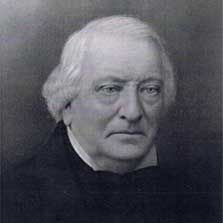
On his arrival, Thomas Kite was assigned, firstly, along with two other convicts, to Lieutenant Purcell at Windsor, where he worked for about eighteen months. In 1815, he was sent to join Cox's road gang, though the road was somewhat completed by the time he arrived. He remained at Bathurst and was assigned to the road gang working out of the local depot on the 'Government side of the Macquarie River.' Kite worked hard, continually showing his initiative with the jobs that were assigned to him. All the convicts who worked under William Cox, the acting Commandant, at Bathurst would later receive their emancipation.
In 1818, Thomas Kite was one of ten men selected by Governor Macquarie and given free land grants at Kelso on the Bathurst Plains. Possibly William Cox had some hand in this. Following this Thomas was given his conditional pardon on 28th October, 1818. Thomas Kite's grant totalled 80 acres, however as he built 'a substantial dwelling' as his residence on the eastern side of the Macquarie River, fairly quickly, his allocation was not reduced, unlike his neighbour, George Cheshire, who lost 20 acres.
Kite was fortunate in these difficult times, he prospered almost from the start, and in 1820, even received a payment from Government Stores over the river at Bathurst, for meat and grain he had grown to deliver to the provision store and granary.
On Tuesday, 26th December, 1820, Thomas married Sarah Bayliss, the 16 year old daughter of Sergeant Bayliss of Windsor and the couple would have nine children. Sergeant Bayliss had come to New South Wales in 1790. Their first daughter Ann was born on 8th December the following year, just two weeks before Governor Macquarie's final visit to Bathurst, before he left the Colony of New South Wales.
Before Sarah Kites death in 1844, she bore nine children - Ann (b. 1821 - married William Lee Jnr.), Jane (b1825 - married Captain Barlow), Eliza (b. 1827 and died aged 15 years), Thomas Jnr (B. 1833 - married Emma Bloomfield), William (b. 1835 - married in 1901 to Elizabeth Wright), Elizabeth (b. 1838 - married Mowbray Stenhouse Forrest), George (b. 1840 - d. 1873 - did not marry), Emily (b. 1843 - married George Lee, M.L.C.) and Sarah (b. 1823 - married Richard Young Cousins.)
In 1821, Thomas Kite was one of a number small settlers who wrote a community letter to the Colonial Secretaries Office in Sydney, complaining that the boundaries of their land had been changed three times in four years by the government surveyors.
Thomas Kite continued his hard work and by 1828 the census showed he owned 150 acres, of which 80 were under cultivation. He also owned a number of livestock including 18 horses, 230 cattle and 1000 sheep, which was quite an achievement in only a decade. He had four assigned convicts and three ex-convicts to run his farm, with three of these being shepherds.
By 1828, Thomas Kite decided to open a single storey inn, this going under the sign the "Dun Cow", the building later being 'incorporated' into "Woolstone", when it was later constructed. Whether this inn was the original house, with some extra rooms added or a different building is yet to be established. Licensed the same year by the Bathurst Magistrates, Thomas Kite was able to monopolise the whole of the legal inn trade on the Bathurst Plains. He operated the small, but much needed establishment for three years, probably with the assistance of one of his convict servants Ben Mansfield, until towards the end of 1831. George Kable then leased it off Thomas in 1833.
In 1830, Thomas Kite received another grant, this time one square mile (about 640 acres.) To help work it he applied for four more convict assignees, of which two were granted. It seems from this time that this now quite successful businessman really started to amass his 'empire'. He also purchased some 1050 acres of land as well as receiving yet another land grant of 640 acres. By 1834 the wool boom had commenced, with wool prices rising sharply. Also an Act of the Colonial Legislature allowed for an easier flow of capital from England into the colony of New South Wales.
When Thomas's youngest daughter married his property manager, Richard Young Cousins, in 1840, he had a home built for them on his land adjoining his "Woolstone" block which was called "Kelsoville" (this home still stands and can be seen from the Great Western Highway). Later Thomas purchased A.K. McKenzie's property "Dockairne" where he established orchards and grew outstanding cherries.
Thomas Kite also purchased town land in Bathurst, Orange and Sydney, as well as acquiring properties such as "Kangarooby" on Molong Creek (11,520 acres), "Cobong" on Cobong (Goobang) Creek (40, 960 acres), "Burrawang" on the Lachlan River, to name a few. By 1839, Kite was possibly the most successful grazier in the central west, except maybe Thomas Icely.
By 1851, Thomas Kite held more then 200,000 acres of land. From 1853, he began to sell of some of his properties, which included "Wardry", near Condobolin, to his son-in-law, Richard Young Cousins. With the money he began to invest in further blocks of land in towns and cities, though there were few of the latter. He purchased premium sites in Sydney. In the 1860's and 70's Thomas purchased shops and dwellings in Bathurst and Orange.
Thomas Kite passed away on Wednesday evening, 13th September, 1876 and is buried at Kelso. He was in "unimpaired health until a few weeks before he died." A report in the Bathurst Times on 16th September, 1876, reports - "Thomas Kites remains were conveyed to the cemetery at Kelso and were followed from his residence by a numerous concourse on foot. Reverend A. Blackett, the Rector and Bishop Marsden officiated. A muffled peal of bells were rung by the Cathedral belfry." Thomas Kite's estate, at the time of his death in 1876, was valued at around £800,000 ($1,600,000).
(extract from Kelso Village Book 1 : Published 2001 by Alan McRae and Carol Churches ISBN 0-646-41551-4)
No comments:
Post a Comment